This comprehensive kombucha drink recipe demystifies the home fermentation process, allowing you to craft a crisp, effervescent, and probiotic-rich beverage safely in your own kitchen. By combining high-quality black tea, pure cane sugar, and a healthy SCOBY culture, this step-by-step guide walks you through the initial primary fermentation phase where complex organic acids develop. Perfect for beginners, this method ensures optimal pH control, clean execution, and standard flavor balancing so you can stop relying on expensive store-bought bottles.
Ingredients
Directions
Boil the Water: Bring 4 cups of your filtered water to a rolling boil in a clean stainless steel pot. Turn off the heat source completely.
Steep the Tea: Add the 8 black tea bags to the hot water. Allow the tea to steep undisturbed for 10 to 15 minutes to extract a deep concentration of tannins and nutrients needed to feed the culture.
Dissolve the Sugar: Remove and discard the tea bags without squeezing them. Add the 1 cup of organic cane sugar to the hot tea, stirring continuously with a wooden or stainless steel spoon until the sugar crystals are completely dissolved.
Cool and Dilute: Pour the hot sweet tea concentrate into a clean, glass one-gallon jar. Pour in the remaining 10 cups of cold filtered water. This dilutes the concentrate and rapidly brings down the overall temperature.
Check the Temperature: Allow the liquid to cool completely to room temperature, ensuring it sits between 20°C and 29°C (68°F to 85°F). Crucial Step: Do not proceed until the liquid is cool, as excess heat will instantly kill the living bacteria and yeast in your starter.
Introduce the Culture: Once the sweet tea is cool, pour in the 2 cups of raw starter kombucha, then gently slide the clean SCOBY into the liquid with sanitized hands. The starter liquid lowers the pH of the batch immediately, protecting it from harmful mold growth.
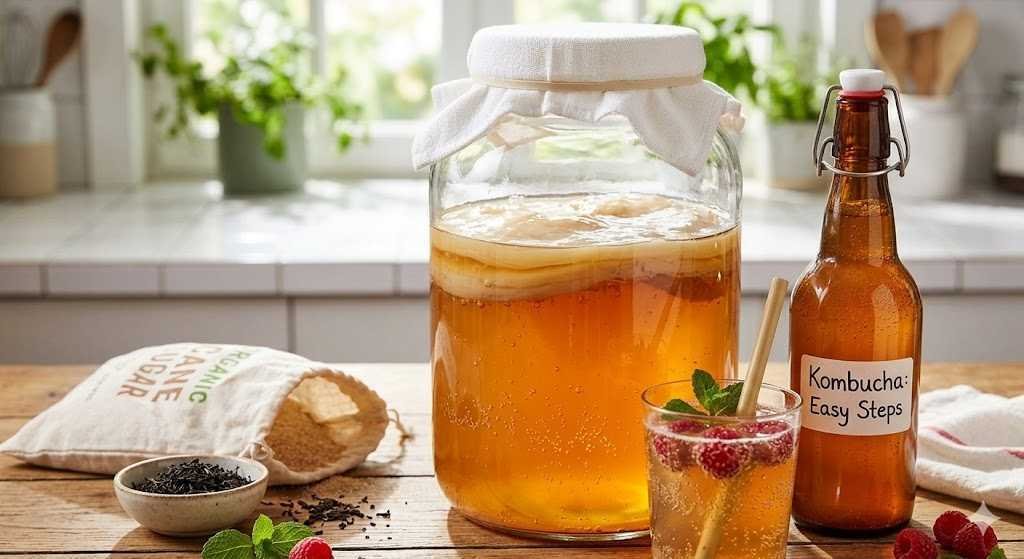
Cover and Ferment: Cover the mouth of the glass jar with a tightly woven cloth, coffee filter, or clean kitchen towel. Secure it tightly with a strong rubber band to keep out dust and fruit flies while allowing oxygen to flow.
The Primary Fermentation: Place the jar in a warm, dark location out of direct sunlight, such as a pantry or kitchen cupboard. Keep the temperature consistently between 21°C and 26°C (70°F to 80°F). Let the batch ferment undisturbed for 7 to 10 days.
Taste Test and Harvest: Around day 7, insert a clean plastic straw underneath the SCOBY to draw out a small sample. If it tastes too sweet, let it ferment for a few more days. If it tastes pleasantly tart, crisp, and slightly vinegary, your primary fermentation is complete. Pour out 2 cups of liquid to save as starter for your next batch, remove the SCOBY, and bottle the remaining liquid for drinking or flavoring.
Expert Cooking Tips & Experience
The Thermal Shock Microbe Rule: The absolute most vital step in executing a successful kombucha drink recipe is verifying the liquid temperature before introducing your living cultures. Yeast and acetic acid bacteria are highly sensitive living organisms. If you place a SCOBY or pour raw starter liquid into sweet tea that is even slightly warm (above 35°C or 95°F), you will cause irreversible thermal shock, killing the microbes instantly. This leaves your sugary sweet tea completely defenseless against airborne mold spores and dangerous wild pathogens. Always use a clean digital thermometer to confirm the base is completely at room temperature.
The Chlorine Volatilization Strategy: Yeast and beneficial bacteria treat chlorine and chloramine—common sanitizing agents found in municipal tap water—as a direct chemical adversary. Using chlorinated tap water straight from the faucet will stunt your fermentation matrix, resulting in a weak, flat brew that is highly susceptible to contamination. If you cannot access filtered or spring water, boil your municipal tap water vigorously for 20 minutes prior to making the sweet tea. This thermal process forces the dissolved chlorine gases to volatilize and evaporate out of the liquid completely, leaving behind a clean, safe habitat for your SCOBY.
The Sanitization vs Sterilization Paradigm: While maintaining immaculate cleanliness is mandatory when fermenting, using harsh chemical antibacterials or household bleach to wash your glass jars is an amateur mistake. Residual traces of chemical sanitizers left behind on the glass walls will leach into the acidic brew, systematically killing off your beneficial bacterial colonies. Instead, wash all brewing vessels, measuring cups, and spoons using plain, boiling-hot water and a splash of distilled white vinegar. The high heat sterilizes the surfaces, while the natural acidity of the vinegar creates an optimal environment that matches the natural pH properties of your kombucha starter.
_(1).png)



_(1).png)