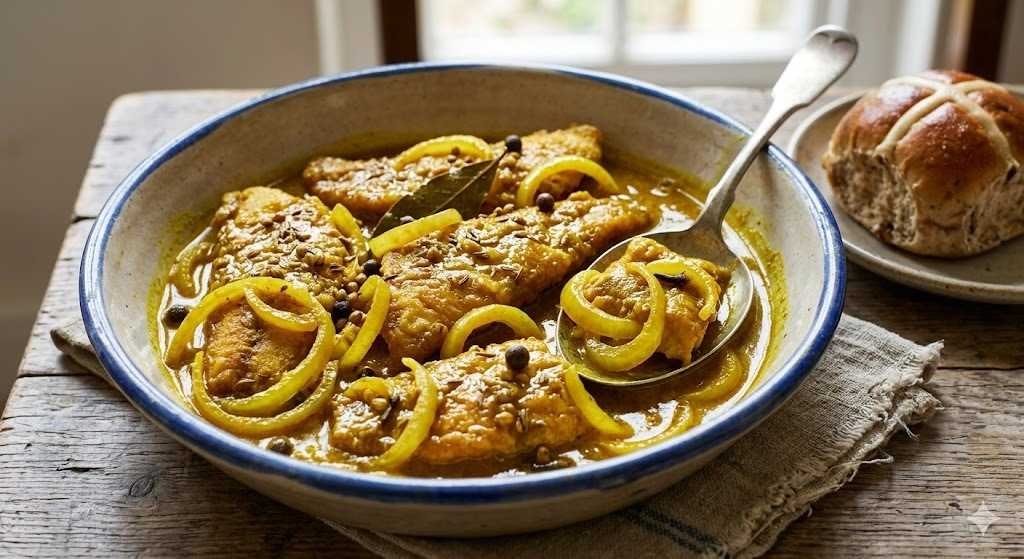
This authentic Cape Malay pickled fish recipe (traditionally known as Ingelegde Vis) is a spectacular South African Easter staple that perfectly marries sweet, tangy, and mildly spiced flavors. Unlike European cold-pickled fish recipes where raw fish is cured in a clear brine, this Cape Town classic requires seasoning and frying firm white fish fillets before submerging them in a rich, aromatic curry vinegar sauce. Packed with turmeric, coriander, ginger, and plenty of sliced onions, the thick golden sauce preserves the fish beautifully while breaking down into a tender, deeply flavored delicacy.
Ingredients
Directions
Prep and Season the Fish: Cut the firm white fish fillets into uniform portions, roughly 2 to 3 inches square. Pat them completely dry with paper towels. Season all sides evenly with the fine sea salt and ground black pepper.
Fry the Fillets: Place the all-purpose flour in a shallow dish. Dredge each piece of seasoned fish lightly in the flour, shaking off any excess. Heat the vegetable oil in a large skillet over medium-high heat. Fry the fish in batches for 3 to 4 minutes per side until the crust is crisp and golden brown, and the fish is just cooked through. Remove and drain on paper towels.
Sauté the Aromatics: In a separate large, non-reactive saucepan (stainless steel or ceramic), add a tablespoon of the remaining frying oil. Turn the heat to medium and add the thick onion rings, grated ginger, and minced garlic. Sauté for 3 to 4 minutes until the onions are slightly softened but still retain a distinct, firm crunch.
Wake Up the Spices: Stir the curry powder, ground turmeric, coriander seeds, cumin seeds, bay leaves, allspice berries, and whole cloves directly into the hot onion mix. Stir continuously for 1 minute until the spices fragrant and toast in the residual oil.
Simmer the Curry Brine: Pour the vinegar, water, and brown sugar into the pot with the spiced onions. Stir thoroughly to dissolve the sugar. Bring the mixture to a gentle boil, then reduce the heat to low and simmer uncovered for 10 to 12 minutes to allow the spices to meld. Optional: Stir in the cornstarch slurry during the last 2 minutes if you prefer a thicker, glossier sauce coating.
Layer the Vessel: Arrange a single layer of the fried fish pieces in the bottom of a deep glass, ceramic, or Pyrex dish. Use a slotted spoon to scatter a layer of the spiced curry onions directly over the fish. Repeat this process, layering the remaining fish and onions.
Pour and Submerge: Carefully pour the remaining hot liquid curry brine completely over the layered fish and onions, ensuring every piece of fish is fully submerged under the liquid.
The Curing Period: Allow the dish to cool completely to room temperature on the counter. Once cool, cover tightly with a non-reactive lid or plastic wrap and place in the refrigerator. Let the flavors mature for a minimum of 24 to 48 hours before serving.
Serve: Serve cold or at room temperature alongside traditional hot cross buns, crusty bread, or a fresh green salad.
Expert Cooking Tips & Experience
The Flour Barrier Strategy: Frying the fish before pickling serves a dual purpose in Cape Malay cuisine. The primary technical reason to dredge the fillets in flour is to create a robust structural envelope around the delicate fish flesh. Acetic acid in the vinegar brine will aggressively soften fish proteins over time. Without this shallow-fried flour crust, the fillets would absorb liquid directly into their cellular structure, causing the fish flakes to disintegrate into an unappealing, mushy paste. The crust acts as a protective shield, absorbing the flavorful curry oils while locking in a firm, meaty texture.
The Onion Crunch Preservation: A common flaw in homemade Cape Malay pickled fish is overcooking the onions into a soft, slippery slime during the brine stage. Traditional South African technique dictates that the onions must retain a crisp, snappy texture to provide a contrast to the tender fish. To achieve this, only sauté the onions until they turn slightly translucent on the edges, leaving the core raw before adding the vinegar. The residual heat of the simmering brine will finish the cooking process gently without destroying the vegetable's structural cellular wall.
The Non-Reactive Storage Imperative: Because the Cape Malay pickling liquid contains a powerful concentration of vinegar and natural citrus acids, storing this dish in an unlined aluminum or iron pan will ruin the batch entirely. The heavy acid reacts chemically with vulnerable metals, oxidizing the liquid and introducing a highly unpleasant metallic taste into the curry sauce. Always cure and store your pickled fish in heavy tempered glass, Pyrex, or high-fired glazed ceramic dishes with airtight plastic wrap to guarantee a clean, authentic flavor profile.

_(1).png)
_(1).png)